
Expert Advice for Sugar Beet Success
Watch our agronomist share essential tips for optimal crop protection
The essential role of fungicides in sugar beet protection
Learn from our technical experts about implementing effective disease management strategies throughout the growing season.
At Syngenta, we're committed to helping growers achieve successful and sustainable sugar beet yields. That's why we offer a range of innovative solutions to help you manage your crop effectively. Whether it's protecting against heat stress, aphid damage, or fungal disease, we have the products and expertise to help you!
The season so far
- Extreme dry weather affected crop establishment in many areas. Good growing conditions followed recent welcome rains, but it has also triggered further weed flushes.
- Aphids have thrived in earlier hot, dry conditions. Myzus persicae were caught early in regional traps and aphids reported by growers on crops.
- Crops stressed by early season heat and drought require extra nurturing to recover and fulfill early sowing potential.
- When weather limits fertiliser uptake, use VIXERAN® biofertiliser to naturally fix nitrogen and ensure consistent crop nutrition, even in challenging conditions.
Agronomic advice
- Monitor crops for disease and treat accordingly to maintain green leaf area and maximise yield throughout the season.
- Biostimulants, including QUANTIS® and MAXICROP®, have an essential role for plant health, especially in stressful growing conditions.
- Watch forecasts for temperature stress periods in the Syngenta Portal app to optimise QUANTIS® timing.
- Monitor crops for aphids to prevent virus infection, particularly up until the 10-12 leaf stage.
- Ensure adequate nutrition for strong growth and root development.
- For more expert advice, contact your local Area Manager.
Product Application Timeline
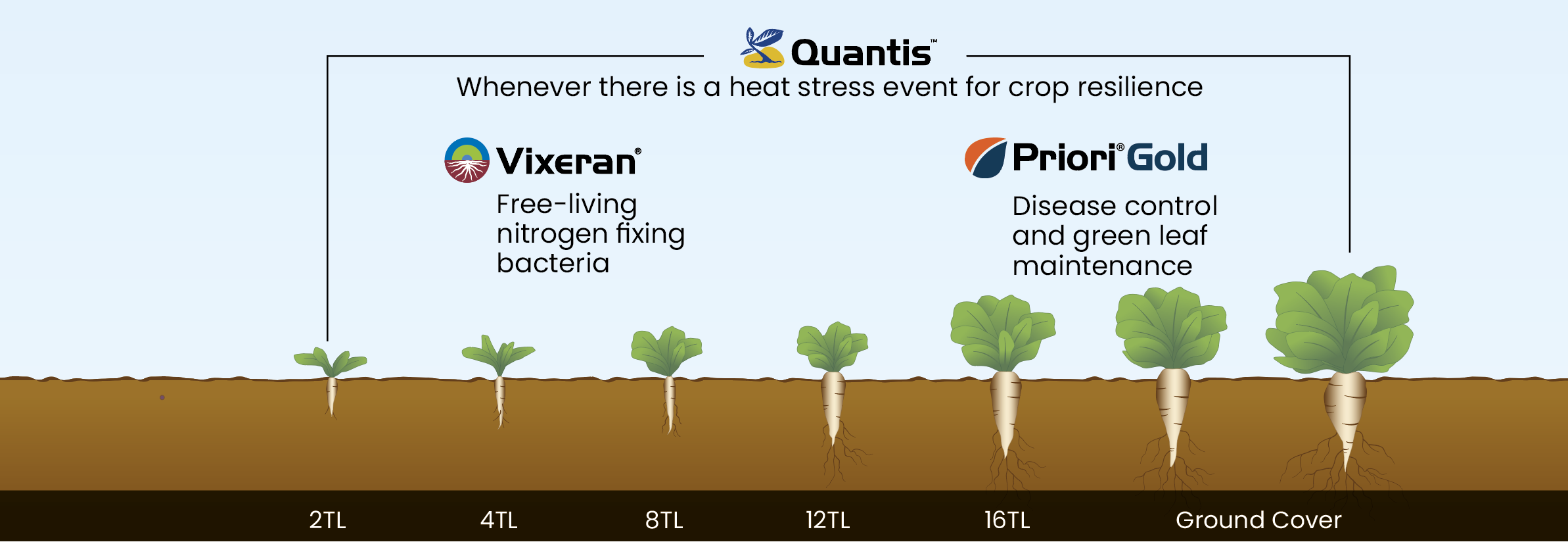
Sugar Beet Product Technical Update
Sugar Beet Protection Portfolio
Discover our complete range of innovative crop solutions





AFINTO® – First choice for sugar beet disease control
Virus yellows and aphid control
Viruses have the potential to reduce crop yields by up to 40% with early infection having the biggest impact. Rothamsted Insect Survey predicts that peach potato aphid migration will start around mid-May.
The following recommendations will help keep your crops virus free:
- Apply AFINTO® when wingless aphids reach the threshold (outlined below). It effectively controls resistant peach potato aphid, halting feeding and virus transmission, making it ideal for small plants.
- Monitor crops from early May to the 12-leaf stage. If aphids are present, use a treatment threshold of 1 green wingless aphid per 4 plants (check at least 5 plants; 5 aphids in 20 plants justifies treatment).
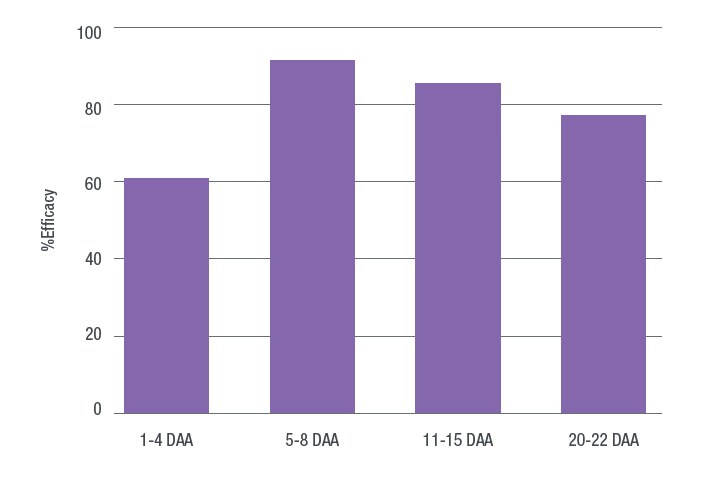
Average of 6 trials in 2022 (DE, FR, UK)
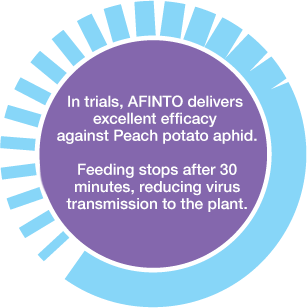
Peach Potato Aphid Control
Product Details
- MAPP No:
- 19622
- Active ingredient:
- 500 g/kg flonicamid
- Crops:
- Sugar beet and fodder beet
- Rate of Use:
- 0.14 kg/ha
- Number of applications:
- 1 application
- Latest application timing:
- 60 days before harvest
QUANTIS™ – Reduce crop stress, maintain growth and build optimum yield
Independent research has shown QUANTIS™ can counter the effects of crop stress that can reduce yield and sugar content. Temperature stress can stop crops growing, reducing yield and potential. Using QUANTIS™ before high temperatures are forecast will minimise the effect of stress and get your crop growing again.
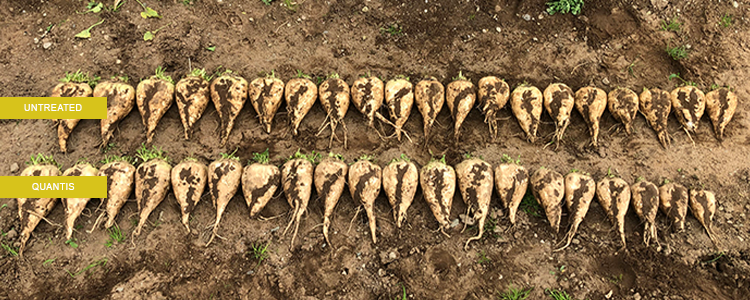
Comparison of treated vs untreated crops
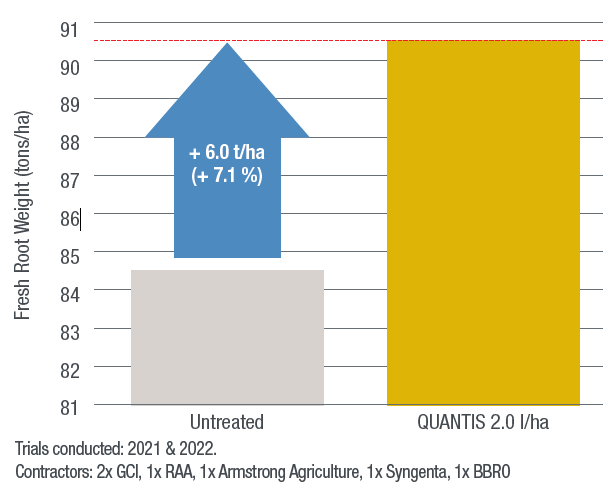
Priming sugar beet with QUANTIS™ before temperature stress event improves final yield - Average of 6 trials
When to use QUANTIS™?
Highest returns of yield and sugar content are seen with an application of QUANTIS™ before the first heat stress event. Maintain applications as repeated stress events occur.
Although protecting from temperature stress at all growth stages is important, sugar beet crops are particularly sensitive to heat stress from the time of crop cover (GS31), when the tap root begins to expand. Applications at this time have been shown to be effective at reducing the effects of stress and enabling sugars to be better transported to roots.
Apply QUANTIS™ at the rate of 2.0 l/ha prior to a stress event.
Product Details
- Purpose:
- To reduce effects of abiotic stress in sugar beet
- Crops treated:
- Sugar beet, Potatoes, Cereals, Maize, Vegetable crops
- Rate of use:
- 2.0 l/ha
- Number of applications:
- Up to 3 applications, when stress periods occur
- Treatment timing:
-
- Ahead of first temperature stress event
- Use the Syngenta Heat Stress Event forecast to time applications
- Repeat application before further heat stress events
- Tank mix:
- With fungicides if applicable
PRIORI® Gold – First choice for sugar beet disease control
With crops drilled into good conditions, don't let green leaf area loss and disease reduce your crop yield potential. Use PRIORI® Gold at first signs of disease to maintain a healthy canopy and bulking for as long as possible.
Disease control + green leaf retention
Combination of strobilurin + triazole actives in one, for better disease control + built-in resistance management.
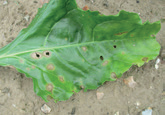
PRIORI® Gold is effective on all UK diseases - rust, powdery mildew, Cercospora and Ramularia.
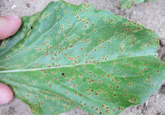
Rust
When: July onwards
Risk: Damp conditions and temperatures between 15–22°C. Varietal susceptibility
Severity: Up to 10–14% yield reduction
PRIORI® Gold rating: ★★★★★
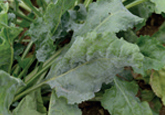
Powdery Mildew
When: July to early autumn
Risk: Mild winters, dry and warm conditions. Varietal susceptibility
Severity: Early infections can reduce yields by up to 20%
PRIORI® Gold rating: ★★★★★
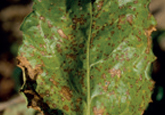
Cercospora
When: Mid July to October
Risk: Warm wet weather, with temperatures above 25°C. No resistant varieties
Severity: Increasing problem in the UK. Losses can exceed 50%
PRIORI® Gold rating: ★★★
Ramularia
When: Mid to late autumn
Risk: Cooler temperatures (17–20°C) and wet conditions
Severity: Usually very low
PRIORI® Gold rating: ★★★★★
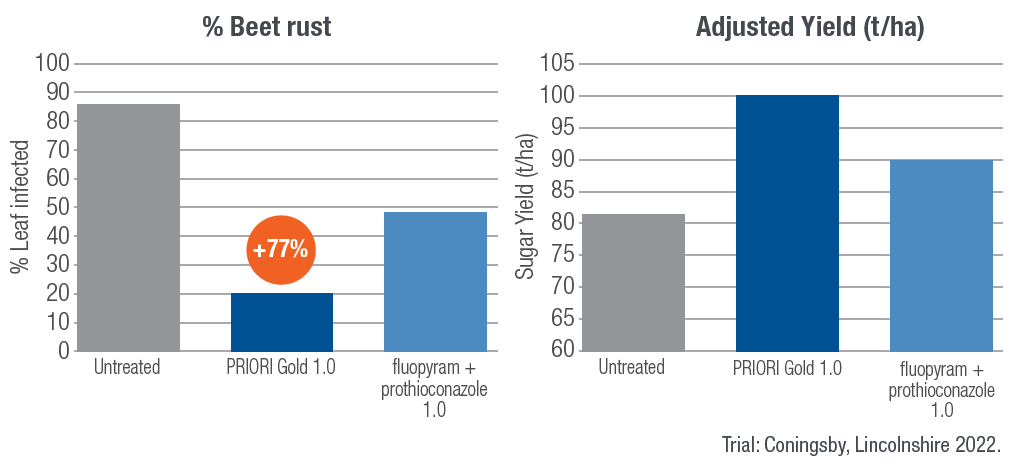
Trial: Coningsby, Lincolnshire 2022
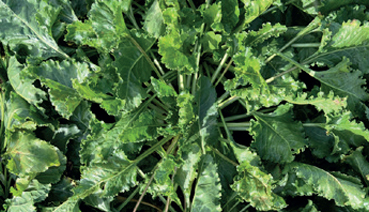
Treated
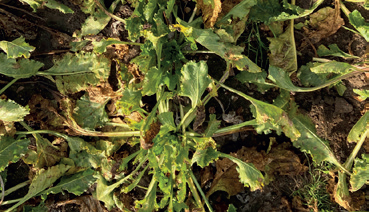
Untreated
Trial: Coningsby, Lincolnshire 2022. Pictured eight weeks after treatment
Autumn growth can account for up to 40% of yield potential, so foliar disease control is critical to maximise grower return. Source: British Sugar
Product Details
- MAPP No:
- 19226
- Active ingredients:
- 125 g/l azoxystrobin + 125 g/l difenoconazole
- Crops:
- Sugar beet, fodder beet
- Rate of use:
- 1.0 l/ha
- Number of applications:
- 2 applications, minimum of 21-day interval
- Latest application timing:
- No less than 35 days prior to harvest
PRIORI® Gold provides:
- Protection against all key sugar beet diseases
- Built-in resistance management
- Increased yield and sugar content
- Early-season disease control
- Performance proven year-on-year
Hallmark Zeon – Pest control for sugar beet
Beet Moth
In 2022, growers saw major issues with Beet moth in some areas. The larva of this pest burrows into the growing point of the plant, seriously reducing canopy and root growth. First egg lay has been observed in late May/early June, with further generations 30 to 40 days thereafter in dry and warm weather. It's thought that heavy irrigation or rainfall will reduce activity.
Use scouting and pheromone traps to help time the control of this difficult pest.
Fungicide application in sugar beet
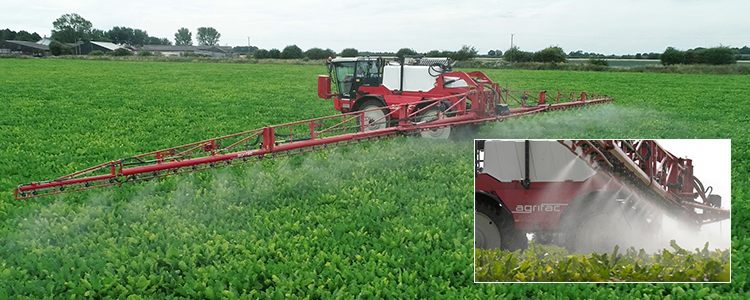
Twin angled nozzles for optimal application
- For early applications (up to 8-12 true leaves), use angled nozzles with a medium to coarse droplet pattern, applying 100 l/ha water volume.
- With later applications targeting the green leaf canopy, use a coarse droplet nozzle and apply at 200 l/ha water volume to improve foliage penetration and coverage of lower leaves and crown.
- The use of 90% drift reduction 3D ninety nozzles has been shown to reduce risk of drift and, for sugar beet foliar applications, could deliver more spray to the lower leaves in the canopy. Fit nozzles facing forwards and backwards along the sprayer boom to alternate the angled spray pattern.
- The angled body of the Syngenta 3D ninety nozzle optimises targeting throughout the canopy, with the very coarse droplet spectrum giving more effective penetration to the crown.
- Drift reduction nozzles improve the stability of the spray pattern to deliver more consistent leaf coverage of the complete canopy, particularly in sub optimal conditions.
Product Details
- MAPP No:
- 12629
- Active ingredient:
- lambda-cyhalothrin
- Crops:
- Sugar Beet
- Pests controlled:
- Flea beetles, Beet leaf miner and cutworm
- Rate of Use:
- 75 ml/ha
- Number of applications:
- 2
- Latest application timing:
- 8 weeks prior to harvest
VIXERAN® – Enhance Sugar Beet Crop Nutrition and Yield Potential
VIXERAN® is a biofertiliser containing nitrogen-fixing bacteria that colonise leaves, roots, and the rhizosphere, providing a natural source of nitrogen to improve crop nutrition and yield potential in sugar beet.

Why early nitrogen is critical
Early nitrogen application is critical for rapid canopy and leaf growth in sugar beet, which absorbs 75-80% of its total nitrogen requirement by late July. During peak leaf expansion in June and July, nitrogen uptake averages 4-5 kg N/ha/day.
VIXERAN® contains the strain Azotobacter salinestris CECT 9690, a unique bacterium that enhances nitrogen uptake and promotes early-season growth and leaf expansion in sugar beet.
Key Benefits
- Natural nitrogen fixation for improved crop nutrition
- Colonises leaves, roots, and rhizosphere
- Enhances early-season growth and leaf expansion
- Supports critical nitrogen demand during peak growth
- Improves overall yield potential