

Integrated weed management for successful crop production
Integrated weed management for successful crop production
Managing weed populations so your crops reach their potential involves taking a proactive and integrated approach. Weeds are one of the most significant threats to cereal production in the UK. Their biological similarity to cereal crops means they compete for light, water, nutrients, and space, causing a reduction in crop yield and quality. Weeds can also be hosts for pests and cereal diseases. Here, we look at best practice weed management, examining the most prolific and economically damaging varieties of weeds, the available product options to tackle them, and the correct application techniques.
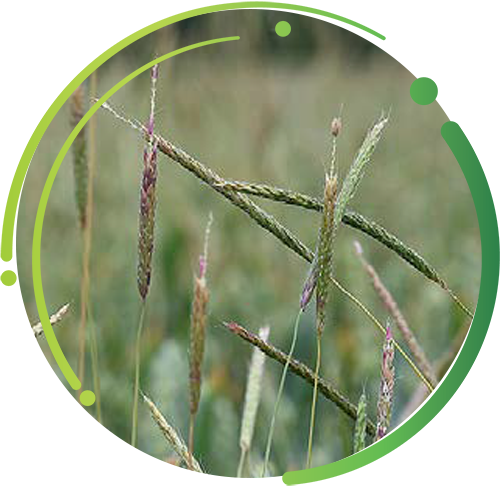
Black-grass
The black-grass problem in the UK is a major issue for cereal growers. 80% of emergence occurs in the autumn which coincides with the sowing of most oilseed rape and winter cereal crops, and just 12 weeds/m² can reduce yield by 5%. Coupled with the fact that herbicide resistance is prevalent in black-grass problem areas, it is easy to see how a few weeds can quickly become a significant burden.

Rye-grass
Rye-grass is an aggressive grass weed and resistance is increasing. Just 5 rye-grass plants per m² can cause a 5% yield loss in a wheat crop. An integrated weed management strategy incorporating cultural controls, the most effective products, and the right application technique is your first line of defence against these invasive weeds.
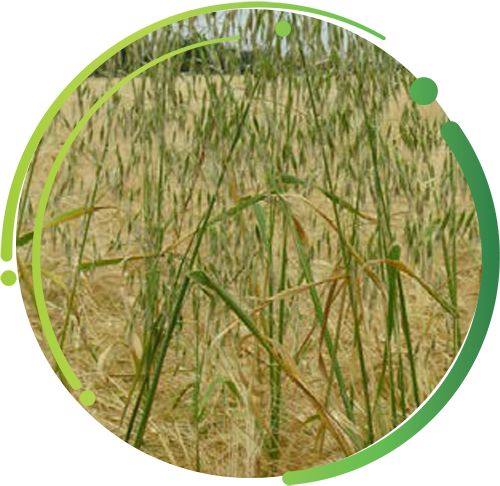
Wild oat
Wild oats are highly competitive and can cause significant yield losses even at very low levels of infestation. What makes them even more problematic is that pre-emergence herbicide application only provides limited control of these grass weeds because they emerge in late autumn and spring.
Product choice and application advice for grass weed control

For black- grass control:
DEFY® is a key component in a robust tank mix for black-grass weed control in both winter and spring cereal crops. Apply it within 48 hours of drilling to prevent weed roots and shoots growing, then apply a sequence 3 weeks later for safe, proven, and effective control.
Pre-emergence application is always the ideal, but conditions need to be good and soil moisture must be adequate. Higher moisture levels extend the residual action of the herbicide, meaning it will be effective against grass weeds which emerge later in the season. If conditions are not suitable, be prepared to adapt rates of DEFY® to suit your peri-emergence and post-emergence programme.
Application tips
Effective application is not just about getting the product onto your crop. To get the best possible results for black-grass weed control, we recommend:
- Keeping your boom down to 50cm or less.
- Reducing your sprayer speed to 12km/hr or less.
- Using a drift reducing nozzle to deliver water volume of 200L/HA.
For rye-grass control:
DEFY® should form the basis of your approach.
Use AXIAL® Pro for rye-grass not adequately controlled by autumn treatments or for post-emergence control of rye-grass in spring sown crops such as spring barley and spring wheat.
Application tips
- Always stick to sequencing and mixing guidelines.
- For best weed control results, tailor spring application rates to the target weed size and growing conditions.
- Spring application technique should be tailored to the crop and weed growth, selecting the most appropriate nozzle, water volume, and operating pressure to optimise target weed coverage.


For wild oat control:
AXIAL® Pro is recommended for control of wild oats in wheat and barley.
Application tips
When it comes to application, getting the timing right and using the correct technique is key. Syngenta recommends:
- At growth stages 11-29, apply 100l/ha with the 3D nozzle.
- At growth stages 30-39, apply 100l/ha with the AMISTAR® nozzle.
- Keep your boom down to 50cm or less.
- Reduce your sprayer speed to 12km/hr or less - measure to manage.
- Map wild oats in your field to monitor control over several seasons and if poor control is seen, test for resistance.