


Managing soil-borne pests and diseases
for a healthy potato crop
Soil pests along with seed and soil-borne diseases can be economically damaging for potato growers because of the impact they have on crop health, yield, and quality. Crop protection is a vital part of your integrated pest management plan, and we offer targeted solutions that consistently protect your crops.
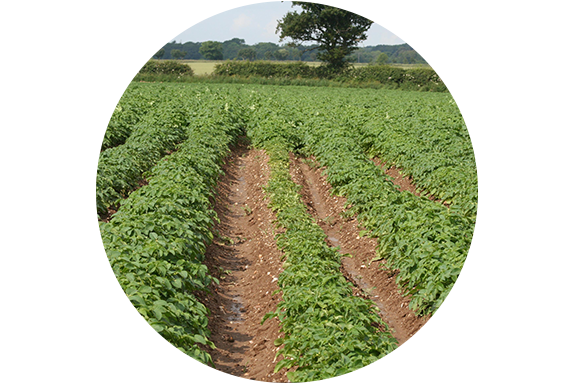
Soil pest management for healthy yields
Ensuring potatoes get off to a good start is essential for a healthy yield. Treatment is an ongoing process, with solutions that target specific soil pests at different stages of the potato lifecycle from pre-planting though to the completion of the canopy.
Here we detail the most important soil pests and pathogens affecting potatoes, the damage they cause, and how you can manage them so you can take steps to protect your crop.
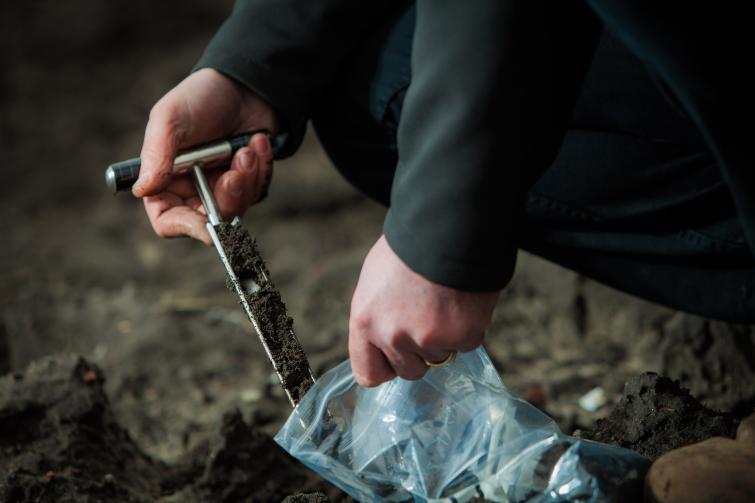
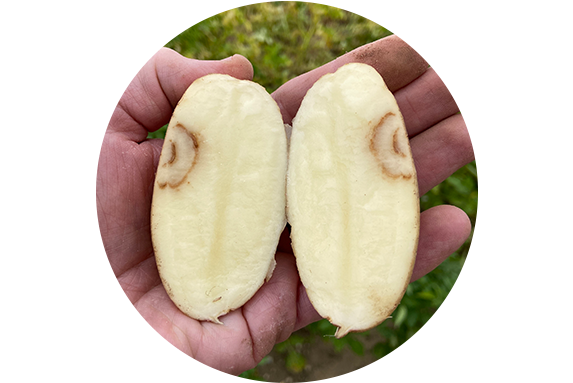
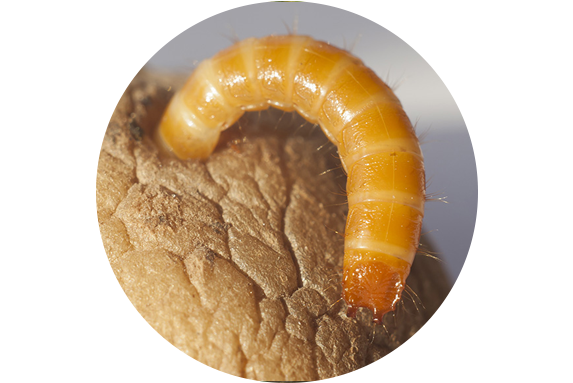
PROTECTING POTATO CROPS FROM SEED AND SOIL-BORNE PATHOGENS
DISCOVER OUR POTATO PRODUCTS

Seed Treatment
MAXIM 100FS
FS (Flowable Concentrate for Seed Treatment)
- 100 g/litre fludioxonil
Nematicide
NEMATHORIN 10G
GR (Granule)
- 10% w/w fosthiazate

Fungicide
AMISTAR
SC (Suspension Concentrate)
- 250 g/l azoxystrobin
Herbicide
DEFY
EC (Emulsifiable Concentrate)
- 800 gms/l prosulfocarb
What is potato cyst nematode?
PCN, a parasitic worm-like organism, is the most challenging soil-borne pest for potato production. There are two species of PCN, Globodera rostochiensis and Globodera pallida. The latter is the most difficult to control and it has become more widespread due to favourable weather conditions and the cultivation of potato varieties that are more susceptible to infestation.
Potato cyst nematode damage to potato crops
PCN damages crops at various stages of its life cycle. The PCN cyst is the dead body of a female nematode, and it contains around 600 eggs. Each egg produces a juvenile. Juveniles develop and moult within the egg and become second stage juveniles. They then invade the roots of the plant, stunting root growth, and settle in the important vessels which help the plant take up nutrients and water from the soil. This causes considerable yield losses.
Potato cyst nematode control
To control PCN and protect your potato crop, incorporate a granular nematicide such as NEMATHORIN® 10G into your integrated pest management plan. Granular nematicides have been shown to reduce the multiplication of post-cropping populations of both species of PCN as well as reducing yield losses.
The process of applying granular nematicides should follow the guidelines set out in the Nematicide Stewardship Programme (NSP), of which Syngenta is a member. The programme provides industry approved best practise to ensure accurate application whilst reducing risk to the environment. Without this stewardship, legislative bodies will not continue to register nematicides for use.
More information on the correct application can be found here.