

Protect potatoes
from foliar pests and diseases
Potato crops face multiple threats that can significantly impact yield and quality. Key challenges for growers include fungal diseases like late blight and alternaria (early blight). Pests such as the peach potato aphid not only cause direct feeding damage, but also act as vectors for transmitting viruses.
Fungal disease: Late Blight and Alternaria
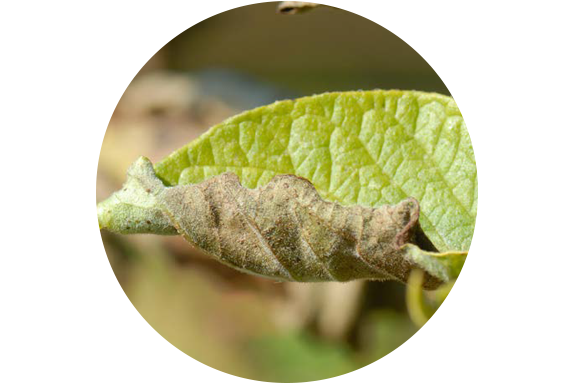
Potato late blight (Phytophthora infestans) continues to create the greatest challenge for potato growers and agronomists. Outbreaks of this blight can quickly devastate entire fields, leading to significant yield losses and widespread tuber blight infection.
Favoured by warmer and wetter conditions, treating potato late blight has been getting progressively difficult and blight resistant potato varieties currently offer little or no respite to the infection.
Visit Syngenta’s recommendations for late blight management
Alternaria, also known as early blight, can decimate potato foliage. Outbreaks can spread very rapidly where conditions are favourable. If this potato disease occurs during the growing season, yields can be severely affected.
While some potato varieties appear particularly susceptible to infection, Alternaria can affect all varieties. Crops under stress from temperature or nutritional deficiency are likely to be affected more severely. How to manage to alternaria
Viral infections: Peach Potato Aphid transmission
Peach potato aphids (Myzus persicae) transmit diseases to potato crops and this can be economically damaging for farmers. If aphid transmitted virus infection occurs, seeds will also be infected and would likely fail to meet standards for sale, effectively making your crop worthless.
Potential virus infections and their symptoms include:
Potato leafroll virus (PLRV) infection: If a peach potato aphid transmits PLRV to your potato crop, you will notice inward and upward rolling of young leaves. They may also be tinged purple. Secondary tuber-borne infection of plants grown from seed will present as a rolling of the older, lower leaves which become ‘leathery.’ PLRV infected plants will become stunted, have fewer leaves, and smaller tubers.
Potato virus A (PVA) infection: Infection with PVA causes mild mosaic, irregular mottling of the leaves which shows up as light or dark green patches, or yellow patches or streaks. There will also be a loss of plant vigour and yield potential.
Potato virus Y (PVY) infection: PVY causes mild to severe mosaic, a reduction in leaflet size, and in severe cases, the necrosis and dropping of leaves.
HOW MUCH DAMAGE CAN PEACH POTATO APHID DO?
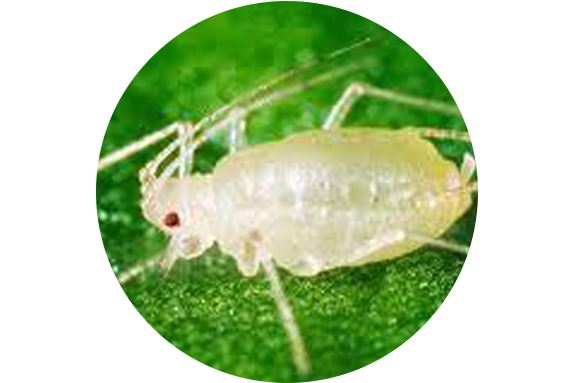
The peach–potato aphid is the most prolific transmitter of aphid-borne viruses. Adult aphids usually land on potato crops in May, and they give birth to live young, which multiply quickly and colonise the underside of leaves. Through feeding, they use a needle-like mouthpart which allows them to feed on sap while at the same time, injecting their own saliva into the plant cells. Their saliva can contain viruses if the insect has fed on a previously infected plant.
Spotting this prolific pest of potatoes
If you grow potatoes, controlling peach potato aphids should be a key part of your potato pest management plan. But to be able to control them, you need to know what you are looking for. These insect pests are 1-2mm long, oval in shape, and green, pale yellow, or pink in colour. You will find them on the underside of plant leaves.
How to control these major potato pests
Firstly, use seed potato certified by the British Seed Potato Classification Scheme which reduces the risk of infection. Aphid control in ware crops is typically only justified in high-risk situations or recognised susceptible varieties. If peach potato aphids are present and have colonised susceptible potato plants, apply HALLMARK ZEON, a fast-acting insecticide which contains lambda -cyhalothrin for the control of potato insect pests.