

Pea Disease Update - Key Threats:
Leaf and Pod Spot
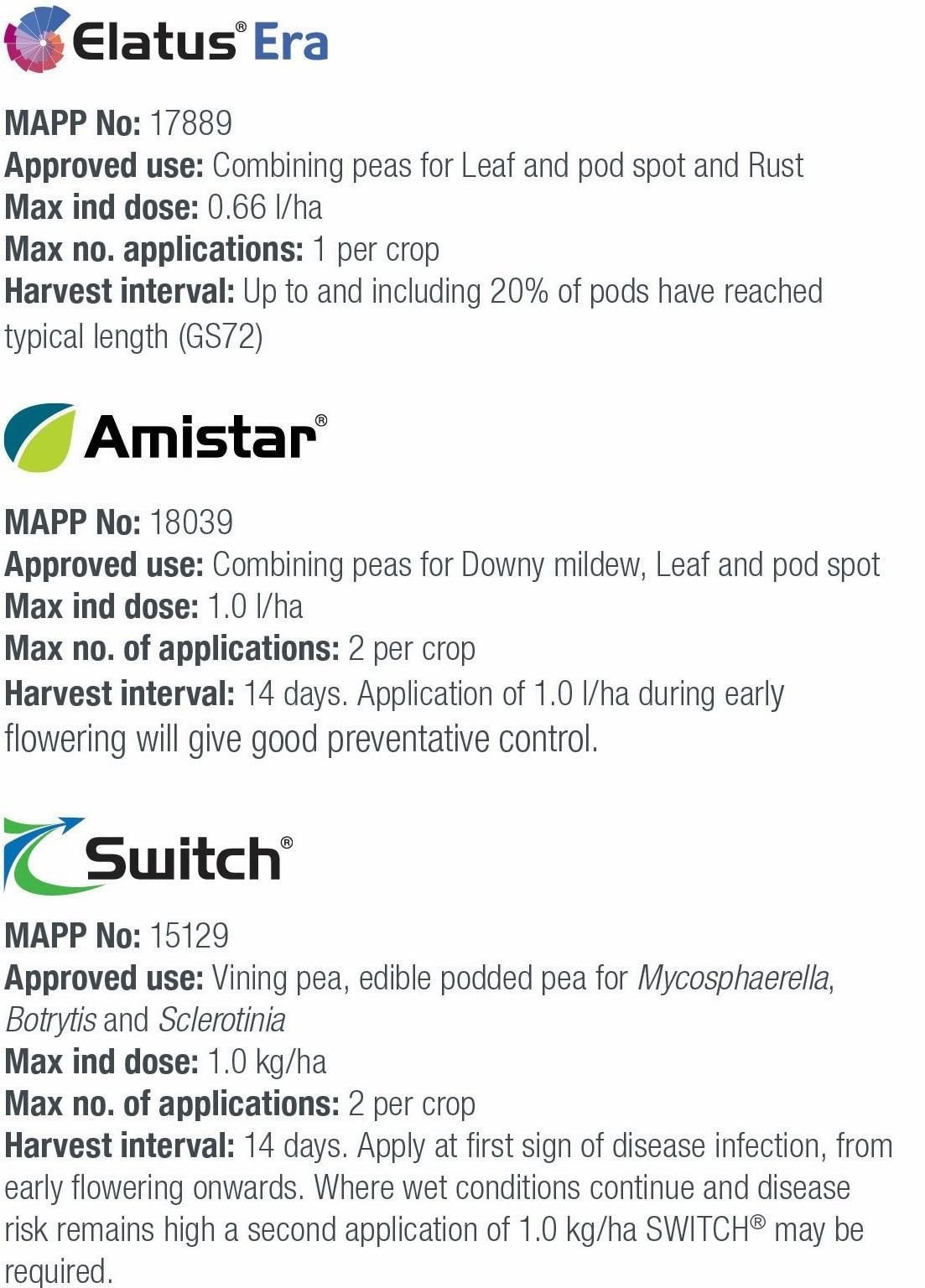
Use clean seed. Apply fungicides from early flowering especially during periods of wet weather as this represents the highest risk for significant disease infection.
Botrytis and Sclerotinia
Petal drop combined with wet weather represent high risk for Botrytis and Sclerotinia infection. Fungicide treatments at pod set and again at flat pod will give the most effective control of Botrytis. Dry weather reduces the requirement for fungicides.
A 1 in 5 rotation should be considered in fields which have previously had Sclerotinia issues. Wet weather at flowering represents a high risk for this disease, a foliar fungicide application should be considered as below.
Syngenta Crop Protection Recommendations
Powdery Mildew
Syngenta trials with ELATUS® Era and AMISTAR® in 2022 showed good control of Powdery mildew, particularly when applied at early flowering timing.
2022 Powdery Mildew - Pea trial, Doncaster
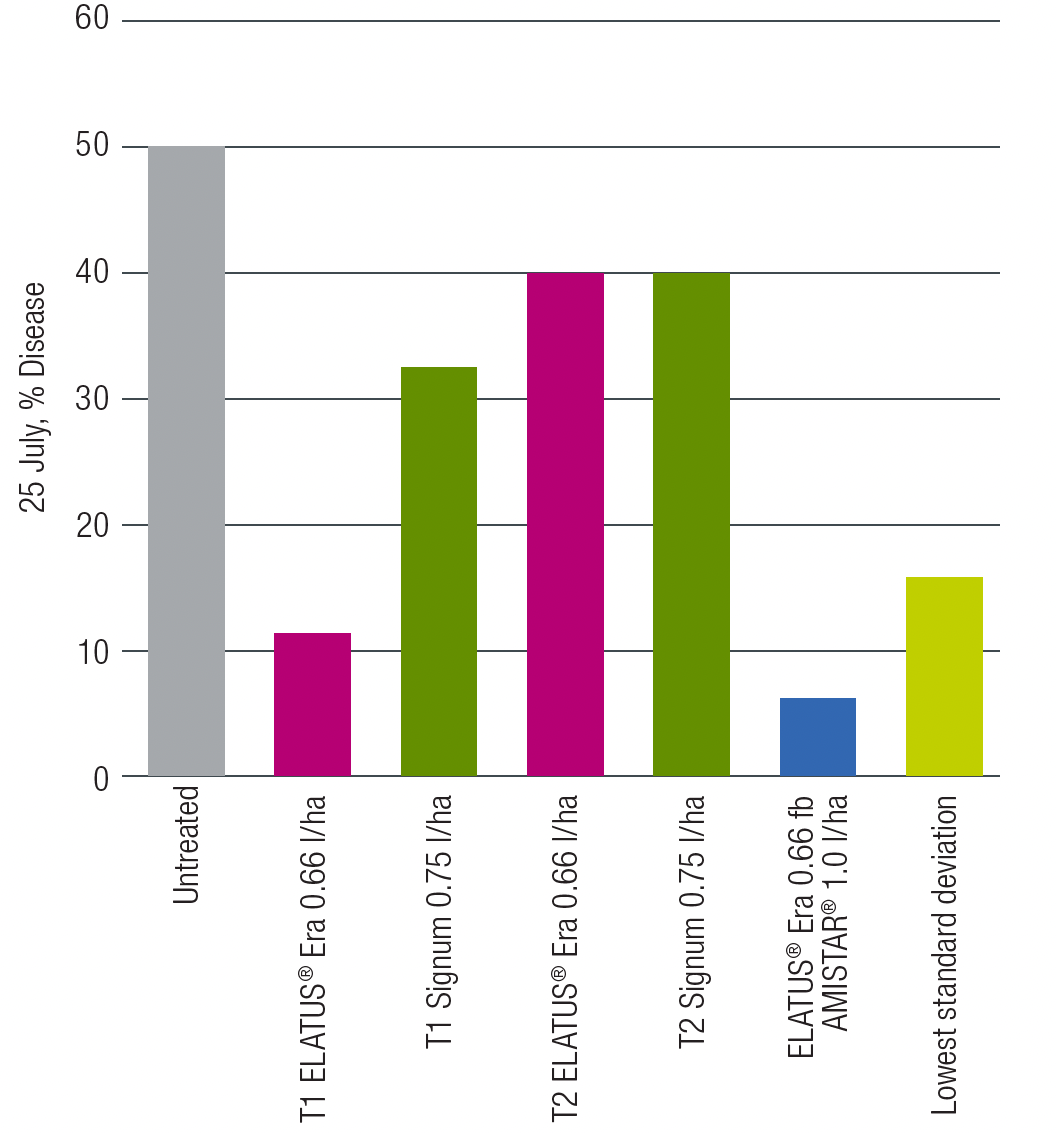
T1 15 June 2022 early flower, T2 04 July 2022 full flower
ELATUS® Era offers broad spectrum disease control in combining peas. In addition, following ELATUS® Era with AMISTAR® at full flower gives good preventative disease control and reduction of Downy mildew, Leaf and pod spot and Grey mould (Botrytis cinerea).
Application Advice for Fungicides on Peas
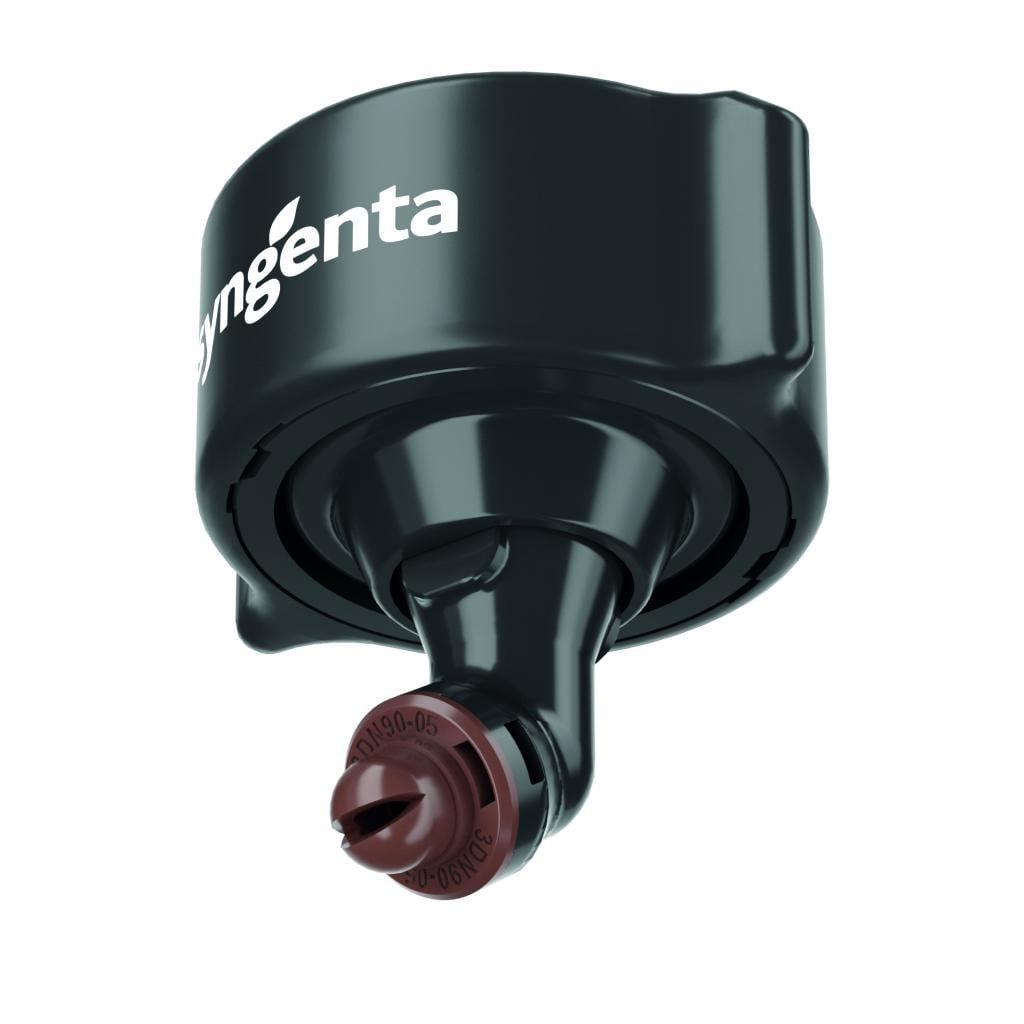
3D Ninety nozzle alternating forward and backward along the boom.
Boom height: Make sure boom is kept at 50 cm above the target - increasing the height leads to increased drift and poorer coverage of the target.
Forward speed: 12 km/hr or slower.
Pea Pest Update
Cultural Controls
Ensure removal of volunteers/weed hosts/green bridges. Heavy cultivation can reduce overwintering soil pests and ensure fine + firm seedbeds. Use resistant varieties and appropriate planting dates to avoid/reduce pest damage.
Pea and Bean Weevil
Timing: March. After periods above 15°C.
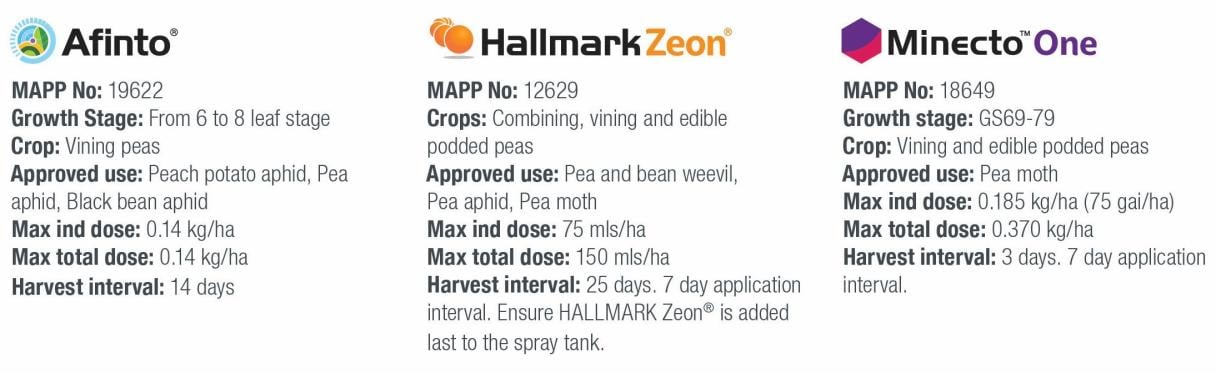
Threshold: An average of 30 or more weevils caught in traps in a single day. Adults transmit Broad bean stain virus (BBSV) and Broad bean true mosaic virus (BBTMV) and cause damage to young bean plants, the larvae feed on root nodules reducing yield by up to 30%.
Pea Aphid
Timing: May-June.
Threshold: Combining peas - more than 20% of plants infested at early flowering; Vining peas - more than 15% of plants infested. Direct damage can lead to more than 10% yield loss. Also transmits Pea seed-borne mosaic virus (PSbMV), Pea enation mosaic virus (PEMV) and Bean leaf roll virus (BLRV). Aphid honeydew encourages disease infection.
Pea Midge
Timing: June-August. Crops susceptible at early green bud stage (early crop, potentially less damage).
Threshold: 500 or more midges caught in one trap (placed by the third week of May), examine susceptible pea crops in the near vicinity. Damage is sporadic, estimated yield loss is 15%.
Pea Moth
Timing: June-July. Budding/flowering crops.
Threshold: Dry harvested peas for human consumption – 10 moths or more caught in traps on two consecutive occasions; Vining peas – if moths detected. Spraying should be targeted at larvae stage between egg hatching and pod burrowing. Effect on quality, but not significantly on yield.
MINECTO™ One’s systemicity is ideal at controlling pests in peas for both pod penetration from pea moth, as well as incidental control of some sucking pests. This will allow more flexible control of pea moth larvae, as it is able to control larvae post hatch unlike pyrethroids, as well as the incidental control of pea aphids and silver-Y moth in peas. Efficacy on both pea moth and sucking pests can be obtained without an adjuvant, but a high % methylated rapeseed oil can improve efficacy, especially in hot years. MINECTO™ One can only be applied post flowering and has a 5M buffer zone.
Syngenta Crop Protection Recommendation