

Field Bean Agronomy Advice
Cultural advice
Healthy, actively growing crops are able to withstand disease and pests better than stressed crops. Establishment is key to a good crop, consider delaying sowing until soil conditions improve to help encourage emergence and a good root structure. Later sowing can have an effect on yield, but this is often compensated by improved soil conditions. Information on this can be found by downloading the PGRO Optibean tool (available at www.pgro.org).
Winter Beans
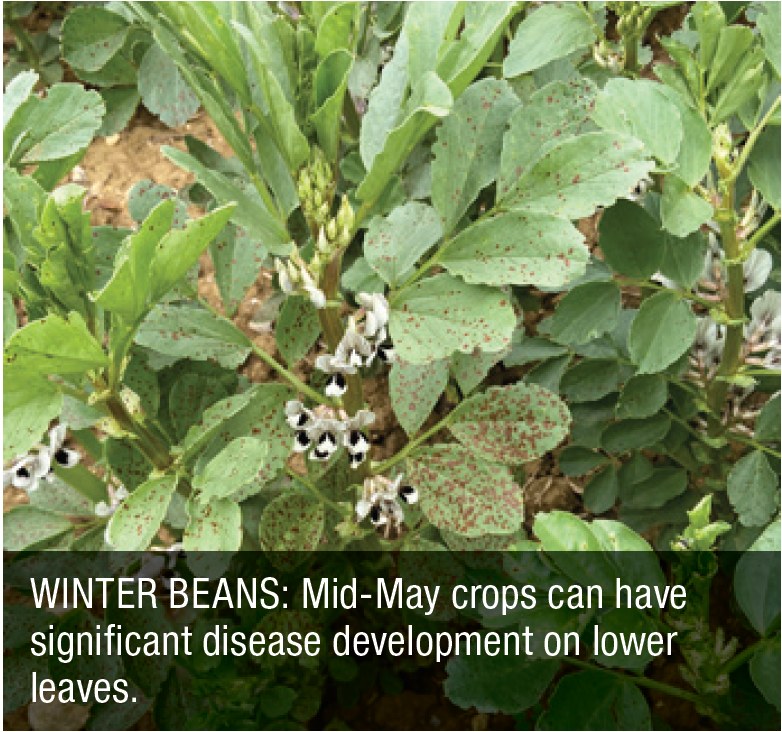
Cold and wet soils can lead to later drilling and slow growth during the difficult autumn/winter months. Crops will benefit from a foliar feed which would ideally include Mn, Mg, Zn and S. This could be applied at early flowering along with AMISTAR® to protect new growth from disease. See below chart for latest data.
Spring Beans
If the weather has been significantly wet over the winter, soils will take a while to dry out. The target will be to drill spring beans early March for highest yield potential. Depending on sowing date and growth, most spring crops will only require two sprays. Starting fungicide sprays at first flower with ELATUS® Era will give the best control of chocolate spot and has been shown to optimise rust control.

Products for Field Beans
ELATUS® Era and AMISTAR® deliver outstanding disease control
AMISTAR® at T0 timing – early flowering, will protect early growth and give preventative control of disease. This is also a good timing to consider applying trace elements (Mn, Mg, Zn) and sulphur.
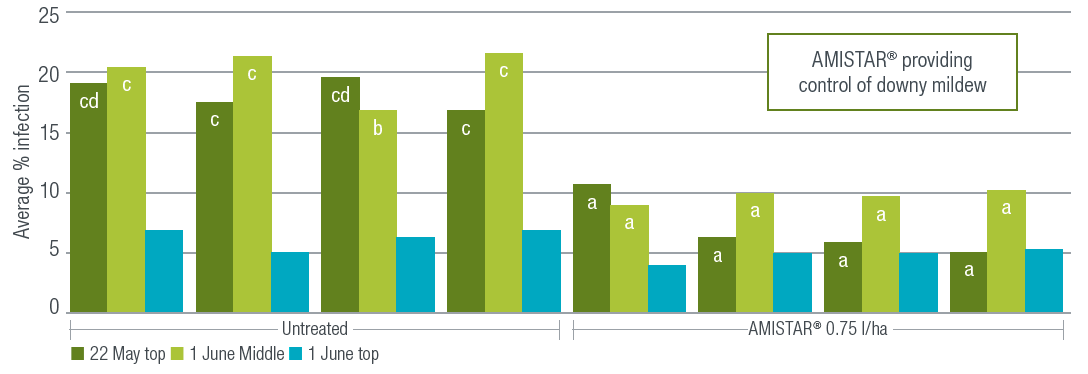
AMISTAR® at T0 providing good control of early disease in Winter beans 2023 (14 May application)
PGRO 2023 Winter beans – Downy mildew
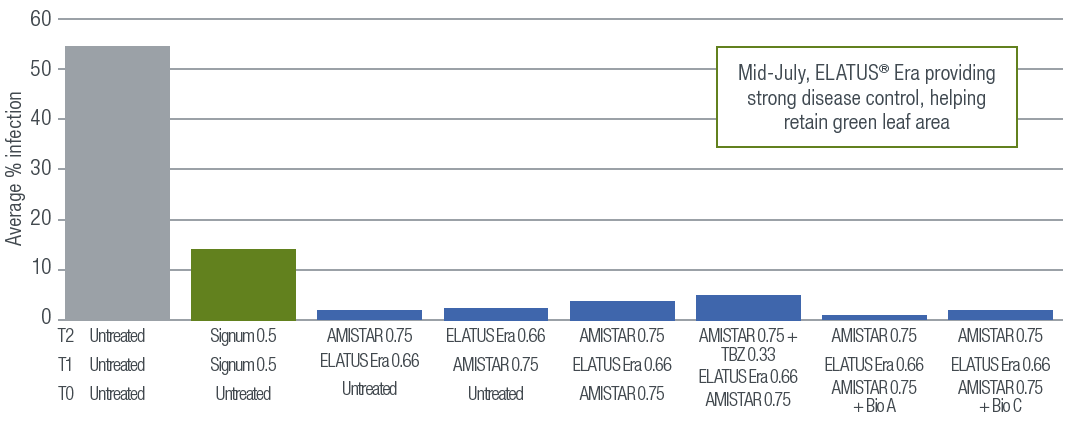
ELATUS® Era at first pod timing (T1) followed by AMISTAR® gives excellent control of both chocolate spot and rust. In 2023 PGRO trials, this combination gave exceptional rust control through to the end of pod fill.
PGRO 2023 Winter beans – Rust (17th July – 25 DAT3)
T0 14th May; T1 8th June; T2 22nd June
Syngenta recommendations
T0 – Early flower, AMISTAR® @ 0.75 l/ha (add trace elements where required) where early disease is seen. Winter beans and spring beans where disease pressure is high.
T1 – First pod, ELATUS® Era @ 0.66 l/ha. All crops.
T2 – 21 to 28 days post T1, AMISTAR® @ 0.75 l/ha. All crops.
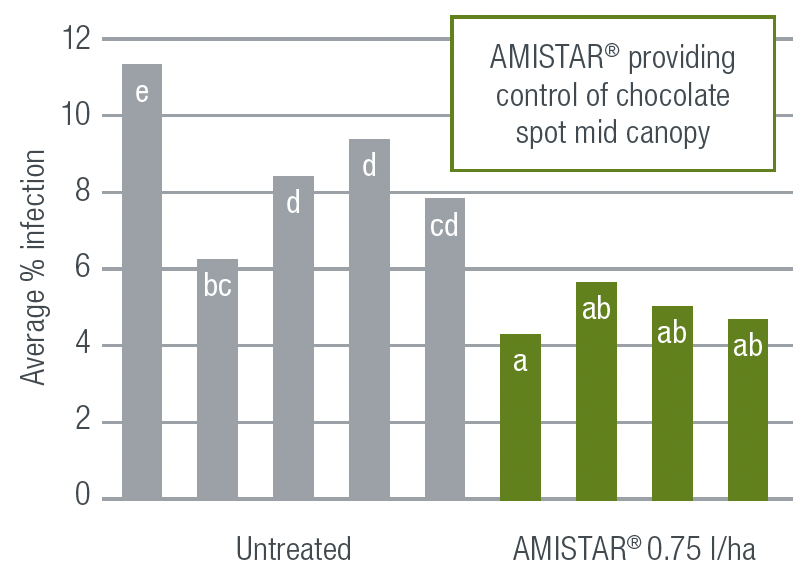
PGRO 2023 Winter beans – Chocolate spot, middle canopy (1st June – 18DAA)
Application advice for Fungicides and Insecticides

3D Ninety nozzle alternating forward and backward along the boom for improved coverage. In denser crops, coverage can be increased by using higher water volumes, but do not exceed 200 l/ha