Cereal spring agronomy
As we enter spring, and the anticipation of warmer temperatures and crop growth, we’ve compiled some seasonal tips to help you make informed decisions to set crops up for a successful harvest.
Read on for this year's top tips on grass weed control, nitrogen use efficiency, and a reminder of PGR programmes for HYVIDO® hybrid barley crops.
Grass weed control
Effective grass weed control is critical to limiting the negative impact on yield in this season’s crops, as well as reducing the potential weed seed return for future years.
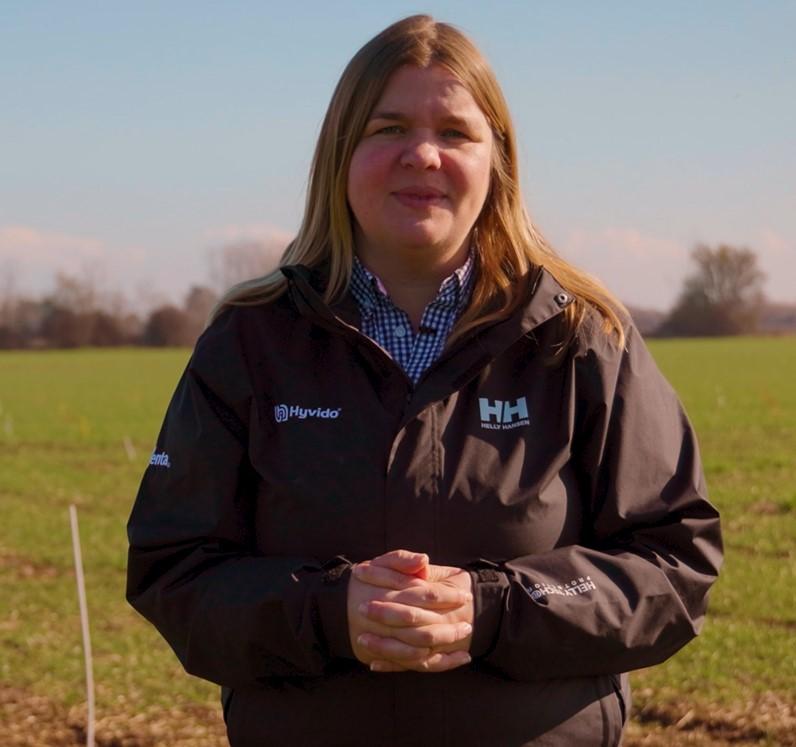
Syngenta Area Manager Charlotte Wright provides a handy guide to help maximise the effectiveness of AXIAL® Pro within integrated weed management strategies this season.
Timing and rates
Larger, overwintered grass weeds are more competitive than spring-germinating weeds, and produce higher seed returns than later spring-germinating weeds. Targeting overwintered weeds should therefore be a key driver for herbicide timing and rate decisions. However, if applications are delayed due to unfavourable field conditions it will mean that any later weeds that have emerged will also be controlled, but rates must be adapted to target the largest weeds in the field.
Effective spring herbicide strategies hinge on timing spray windows with periods of active weed growth. Trials have shown that it is better to wait until conditions are favourable for weed growth before a herbicide application, even if higher rates are then required to tackle larger weeds. Remember that larger weeds are harder to control, so target rates to control the largest individuals.
The recommended rate of AXIAL® Pro in winter crops when targeting over-wintered wild oats is 0.82 l/ha. This rate also provides effective control against a range of other grass weeds, including ryegrass, and incidental control of brome species. Applications of sub-lethal doses increase the risk of resistance developing.
Looking ahead to control in spring crops where overwintered grass weeds are not present, spring-germinating wild oats can be controlled by 0.6 l/ha of AXIAL® Pro.
Mixing and sequencing
AXIAL® Pro can be tank-mixed with a range of herbicides that tackle broad-leaved weeds in order to target a wider range of weeds in one hit.
It is always recommended to use AXIAL® Pro at the full rate for the target weed when mixing with some herbicides including ALS inhibitors, halauxifen, fluroxypyr and clopyralid. These mixes would be best avoided if growing conditions are suboptimal at the time of application.
It’s important to note that where AXIAL® Pro is used first, for example to target overwintered grass weeds, SU/ALS inhibitor or hormone herbicides can be applied just seven days later.
However, if the SU/ALS inhibitor or hormone herbicide is applied first in the sequence, growers should wait 21 days before applying AXIAL® Pro – by which time grass weeds will have grown progressively larger and may require higher rates for optimum control.

For more information and to read our FAQ section, please click here
For further time saving this spring, where growth stages coincide, AXIAL® Pro can be tank mixed with MODDUS® which will promote rooting and prevent lodging.
Lots of factors will impact lodging risk in a crop. It is important to consider location, weather, green area index, drill date, soil type, variety and seed rate. A three-spray PGR programme is always recommended for hybrid barley to promote rooting, thicken stem cell walls and reduce crop height.
Discover more about PGR programmes for HYVIDO® hybrid barley here
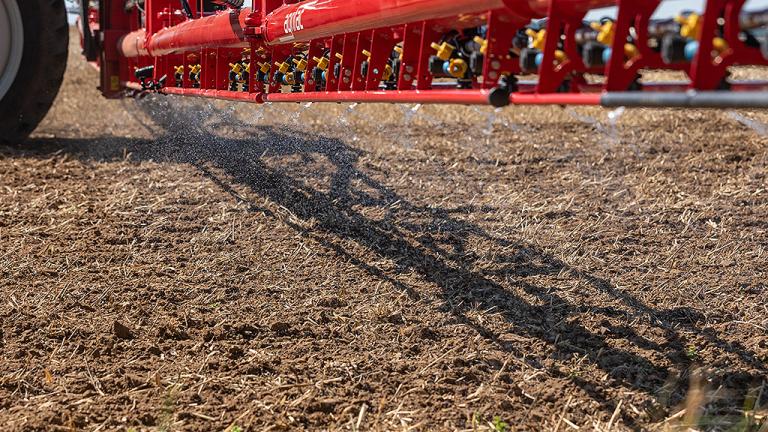
Adapt nozzles and water volume to hit the target
- Small weeds in an open canopy <GS30
- This is the easiest timing to hit the target and small weeds are easier to control. Use a water volume of 100 l/ha, applying small droplets via an angled nozzle for all-round coverage.
- Small weeds in a taller/thicker crop canopy >GS31
- Use a water volume of 200 l/ha for a greater number of droplets. Larger droplets can penetrate further into the canopy.
- Large weeds emerging from the top of a taller/thicker crop canopy GS31-41
- Some evidence suggests that smaller droplets and concentrated solution at 100 l/ha can perform well at this timing. Growing conditions MUST be good for product translocation from the leaf tips, where it will be deposited, to the rest of the plant. Keep product rates up.
- Large weeds within a taller/thicker crop canopy GS31-41
- This is arguably the most challenging situation to hit the target and big weeds are harder to control. Larger droplets have more momentum to penetrate thick crops. A water volume of 200 l/ha delivers more droplets and increases the chances of hitting weeds. Rates must be kept high to deposit sufficient active ingredient.
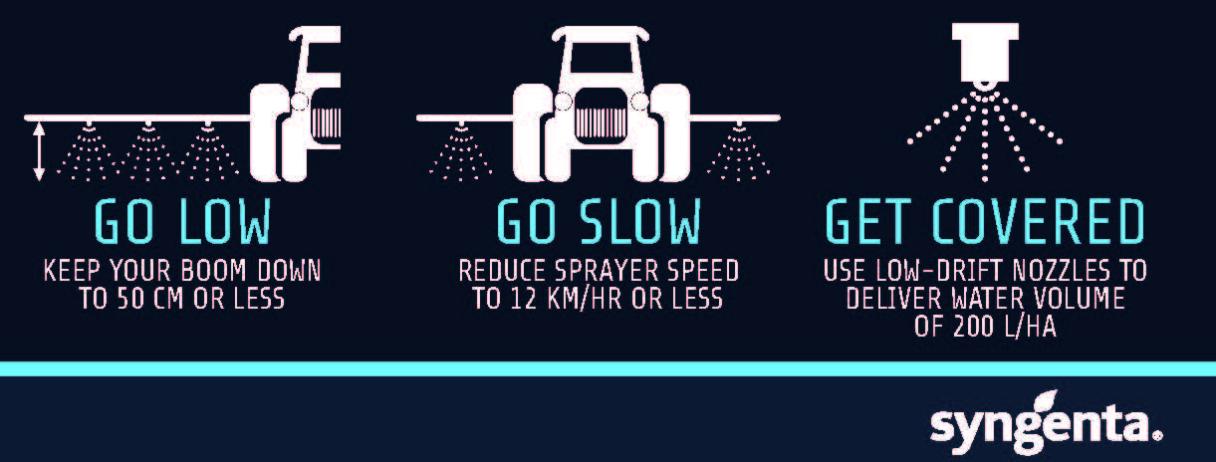
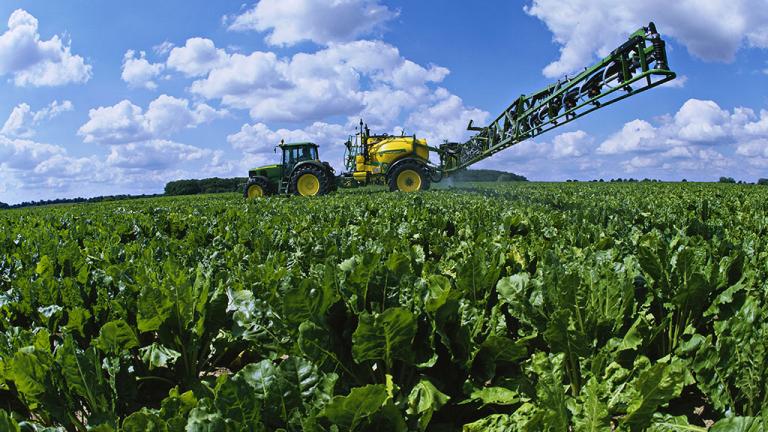
Remember to go low and maintain a boom height of about 50 cm above the target. Maintain a consistent forward speed of 8-12 km/h to ensure even application and coverage.
Drift reduction technology could help make the best use of any available spray window as workloads stack up over the busy spring period. The Syngenta Spray Assist App is designed to help operators select the optimum combination of available nozzles and sprayer set up for any application over the season.
“By following these guidelines, growers can optimise the performance of AXIAL® Pro in cereal crops, helping to achieve effective grass weed control and protecting yield potential” concludes Charlotte.
Playing this video requires a marketing consent.
Click anywhere on the video to renew your consents.
This season we are working with John Cussans and ADAS to explore integrated techniques to help control grass weeds even further. Take a look at the video to find out more..
Does your crop get the nitrogen it needs, when it needs it?
Enhance Nitrogen Use Efficiency and yield potential with VIXERAN®

In cereal crops, every day of growth is crucial. Your plants need the right nutrition at the right time to reach their full potential. For example, winter wheat needs about 70% of its total nitrogen between growth stages GS21 to GS39.
What is VIXERAN®?
VIXERAN® contains nitrogen-fixing bacteria that capture atmospheric nitrogen and transform it into a form readily accessible to your crops. It is an innovative solution that provides an alternative and complementary approach to improve nitrogen use efficiency on your farm.
What are the key benefits?
- Enhanced crop performance: VIXERAN® offers a natural source of nitrogen that bridges the gap between what the crop gets and what the crop needs, leading to enhanced crop development and ultimately higher yields.
- Proven nitrogen fixation: Trials demonstrate that VIXERAN® can fix nitrogen equivalent to 30 kg/ha, providing crucial support during critical growth stages.
- Easy integration: VIXERAN® is used as a foliar treatment that can easily be integrated into your cereal crop management practices; it is compatible with many crop protection products.
Experience the future already this spring – add a breath of fresh air to your nitrogen strategy!
Discover how VIXERAN® can improve nitrogen use efficiency and build yield potential
Do you want to know how to maximise the results of your VIXERAN® treatment?
Check out this article: "Mastering VIXERAN® Application: Top Tips for Optimal Results"


Meet the Biological Mythbusters
Experts Andy Cunningham and Neil Procter debunk myths about biological products. Check out this video where Andy breaks down the three critical conditions for nitrogen-fixing bacteria.
Looking Ahead
By implementing these spring agronomy strategies for weed control, nitrogen efficiency, and plant growth regulation, you're helping to set the stage for resilient, high-yielding cereal crops that will carry you through to a successful harvest.
Keep an eye on your inbox for more agronomy tips and support as the season progresses.