
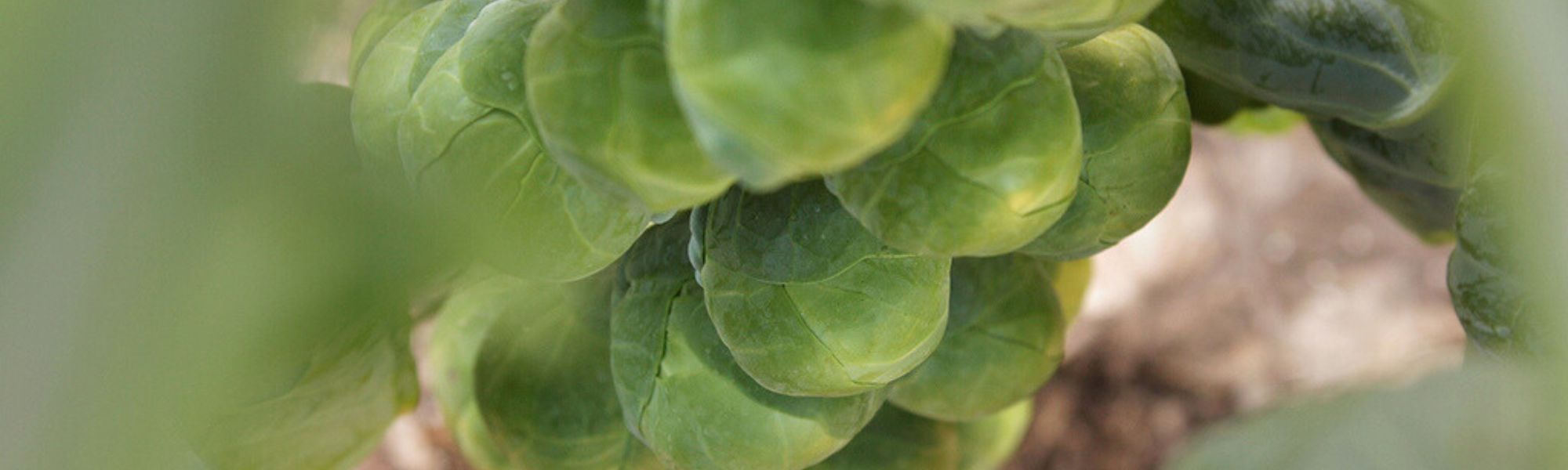
The major foliar disease issues of brassica crops cause crop loss by reducing quality of the marketable plant parts. A robust disease control strategy will ensure that disease does not establish on the frame leaves or developing canopy. This will help prevent movement of disease to the marketable parts, for instance, cabbage heads or buttons of Brussels sprouts. Control of foliar disease should be considered at all stages of crop production to include cultural methods.
Cultural control
- Locate spring crops away from overwintered crops
- Destroy and incorporate harvested crop residues which may be infected
- Choose tolerant varieties
- Ensure good disease control through plant propagation
Varietal tolerance
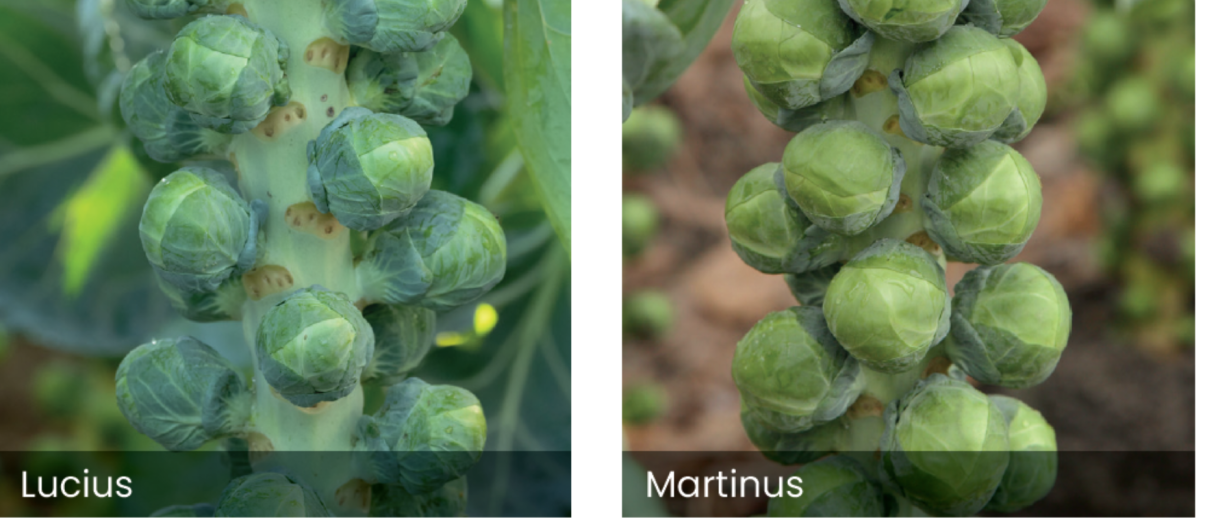
Syngenta’s Brussels sprout trials show some varieties have good tolerance to light leaf spot infections. Martinus, Lucius, Platinus, Albarus and Batavus have all shown good tolerance to the disease. Savoy cabbage varieties with resistance to ringspot and white blister include Cordesa, Cordoba and Corripa. Kilastor from our white cabbage selection has resistance to white blister.
Syngenta’s broccoli variety, Beany, has good tolerance to systemic downy mildew in the autumn when pressure is high.

MAPP No: 18050 Active Ingredients: azoxystrobin and difenoconazole Approved use: Broccoli, Brussels sprouts, cabbage, cauliflower, collards and kale Disease spectrum: White blister, Powdery mildew, Ring spot and Alternaria spp Maximum individual dose: 1.0 l/ha Maximum number of applications: 2 Latest time of application: Cabbage, Brussels sprouts, collards and kale 21 days before harvest. Broccoli, calabrese, cauliflower 14 days before harvest Aquatic Buffer Zone Distance (metres): 5 For use on broccoli/calabrese, Brussels sprouts, cabbage, cauliflower, collards, and kale, the maximum total dose of difenoconazole must not exceed 250 g per hectare per year. When using in sequence with other azoxystrobin containing products, or on multiple short season crops of broccoli, calabrese, Brussels sprouts, cabbage, cauliflower, collards and kale, the maximum total dose of azoxystrobin must not exceed 500 g azoxystrobin per hectare per year.
Important foliar diseases
Ringspot (Mycosphaerella brassicicola): Infection requires temperatures above 10°C and 54 hours of wet leaves in a 3 day period. Disease risk increases as the crop canopy develops and takes longer to dry. Risk declines in the autumn as temperatures drop below 10°C. Ringspot can cause yield and quality issues in Brussels sprouts, cabbage and collards. Although not considered a major issue of broccoli it can reduce green leaf area and potentially reduce yield. AMISTAR Top® gives good control of Ringspot especially if used early in the season.
White blister (Albugo candida): Risk is associated with warmer periods (temperatures above 20°C) and requires only short periods of leaf wetness for infection. White blister is often seen in August with risk increasing as morning dews are more frequent. Disease can be seen on the buttons of Brussels sprouts, on cabbage leaves and on the head of broccoli. Strobilurins such as AMISTAR® can give good preventative control. Where risk is high, SL567A is recommended.
Application
For deposition onto the buttons and lower leaves we recommend Lechler ID3 120‑05, 300 l/ha, consider using an approved adjuvant oil, especially when crops have significant wax.
Timing and monitoring
Regular crop monitoring and the use of forecasting systems are recommended to help support disease management.

Trial results 2023
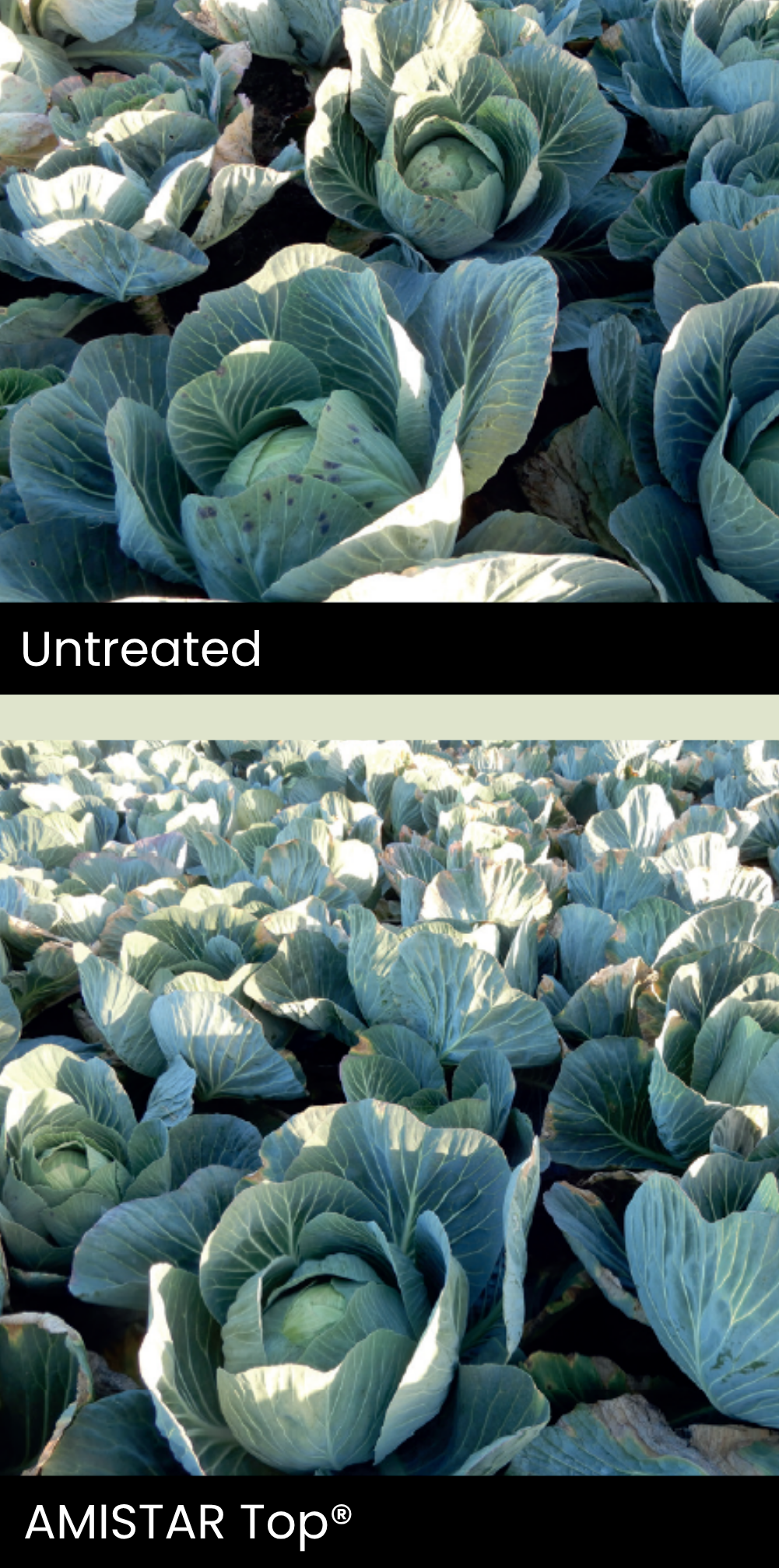
Two independent trials in 2023 illustrated the efficacy of AMISTAR Top® against foliar disease, applications starting in late July resulted in clean crops as shown in the pictures taken mid-November.
Related products

Fungicide
AMISTAR TOP
SC (Suspension Concentrate)
- 200 g/l azoxystrobin
- 125 g/l difenoconazole
Fungicide
AMISTAR
SC (Suspension Concentrate)
- 250 g/l azoxystrobin
Fungicide
SL 567A
SL (Soluble Liquid)
- 465.2 g/l metalaxyl-M