


The Importance of Stewardship
Strong stewardship practice is vital to the continued use of nematicides; without it, legislative bodies could discontinue the authorisation for their use. Syngenta is a member of the Nematicide Stewardship Programme (NSP) because we recognise the importance of nematicides and want to ensure that our customers can continue using them. This means sharing best practice, ensuring overuse and resistance is avoided, and the environment is not put at risk through their application.
The pests
Nematicides protect against three main pests: Potato Cyst Nematodes (PCN), Free-living Nematodes (FLN) and Wireworm. NEMATHORIN® is proven to be effective against all three, and measured use is the key to the continued licensing of products that rely on it.
Wireworm
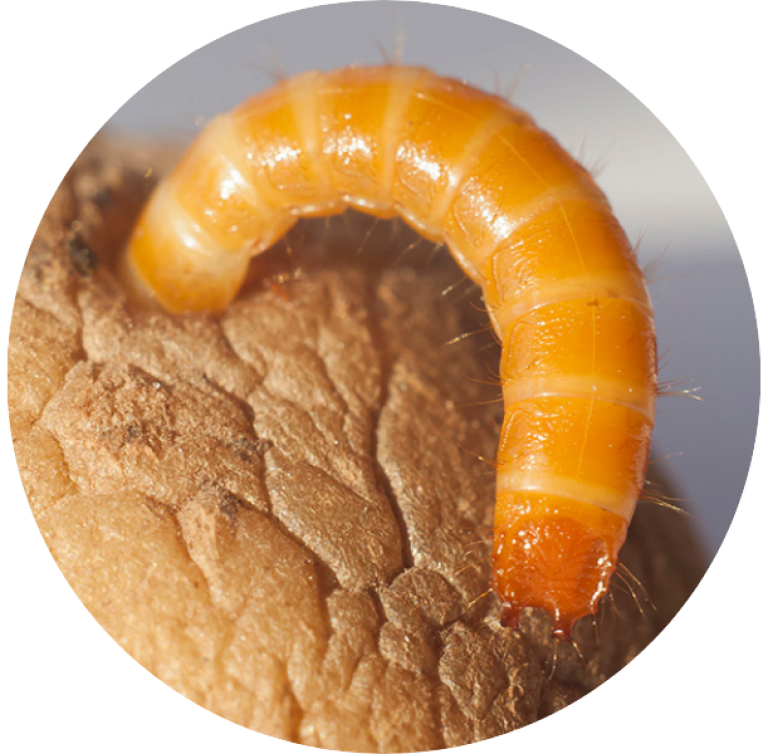
Click beetle larvae
Wireworm damage often leads to:
- Increase in grass weeds and cover crops
- Reduced cultivations
- Reduced options of control in other crops in the rotation
- Changing climate
- Limited options of control
Potato Cyst Nematode (PCN)
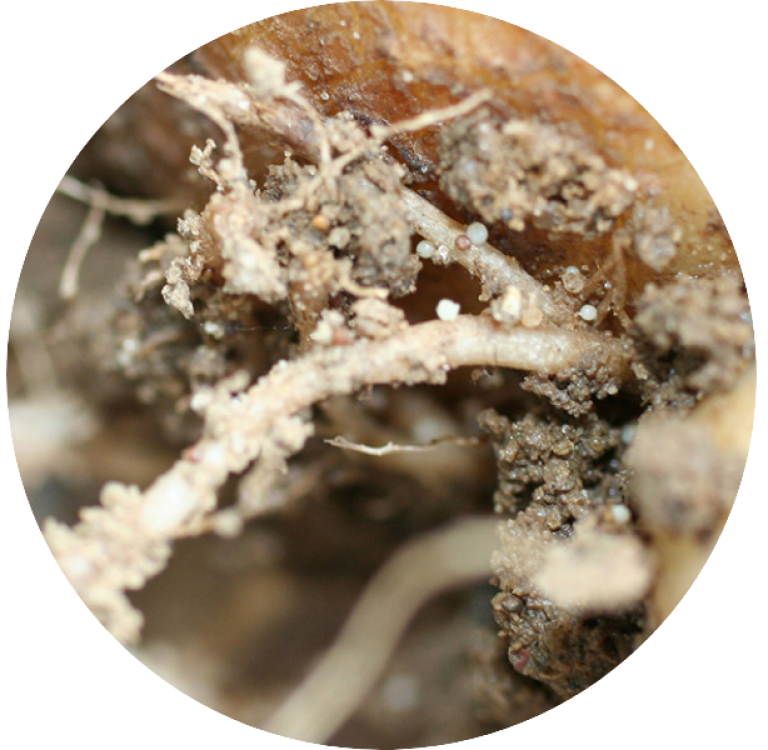
PCN cysts on potato roots
Globodera pallida is now the most widespread PCN:
- Longer hatching period in the crop
- Favourable weather conditions for PCN
- Longer viability of cysts in the soil
- Limited availability of commercial resistant varieties
- Reduced options for control
Free Living Nematode (FLN)
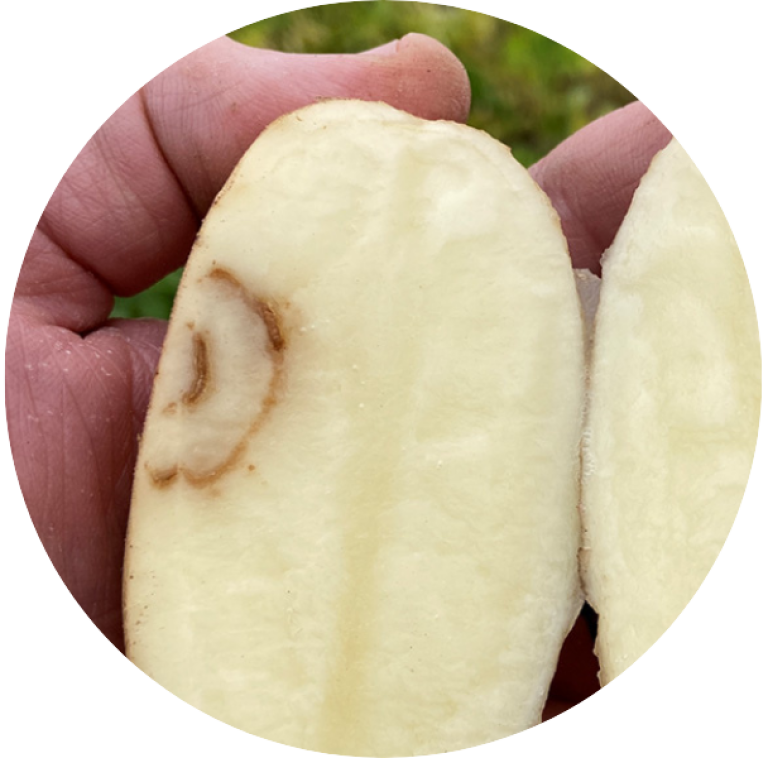
Spraing symptoms
Tobacco Rattle Virus (TRV) causes spraing symptoms:
- Large number of TRV host crops in rotation
- Irrigated crops
- Limited options of control
Stewardship in ICM and IPM
Integrated Crop Management (ICM) and Integrated Pest Management (IPM) are both concerned with longevity of solutions, not simply maximising yields in the short term. Crop variety choice is important, and reference should be made against the AHDB database or breeders’ information to ensure best practice for the conditions. Resistant varieties might prevent nematode populations from growing, but damage to the crop can still occur. Tolerant varieties can produce good yields, while leaving a high PCN population in the soil profile.
Because of this, understanding your starting point, and treating as required is key to establishing control. Crop rotation, trap-cropping, control of volunteers and biofumigation from certain brassicas can also be formidable weapons in your arsenal.
Sampling and thresholds – by the numbers
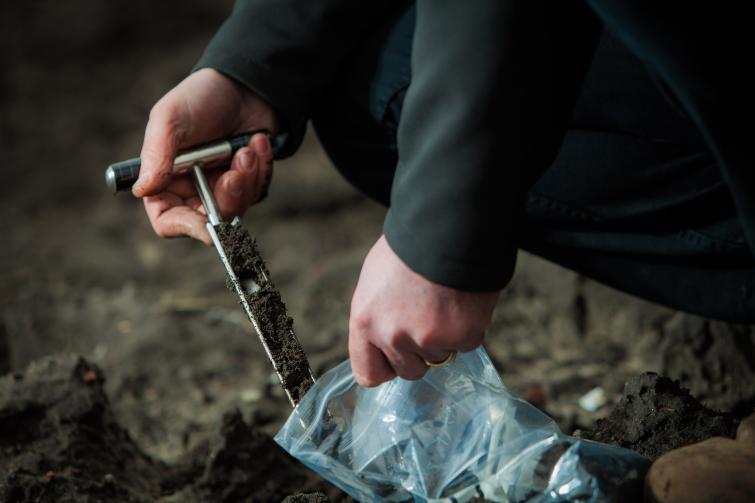
Sampling is the first step to assessing the need for NEMATHORIN® use, and the AHDB has developed a sampling protocol for PCN following industry consultation. This protocol suggests the area and number of samples needed, the method and depth of sampling, and how samples should be tested in a laboratory. Results then dictate the treatment and best course of action in terms of varieties that might perform best.
NEMATHORIN® use and safety
Once the testing has been completed, a plan of action can be created. Any plan that includes the use of NEMATHORIN® needs to consider a range of factors to ensure correct control and safe use.
The guidance on this covers maximum dosage and the timing of applications as well as the qualifications needed for operators. Monitoring during application and after for adverse effects to wildlife is also a key part of the process.
Playing this video requires a marketing consent.
Click anywhere on the video to renew your consents.
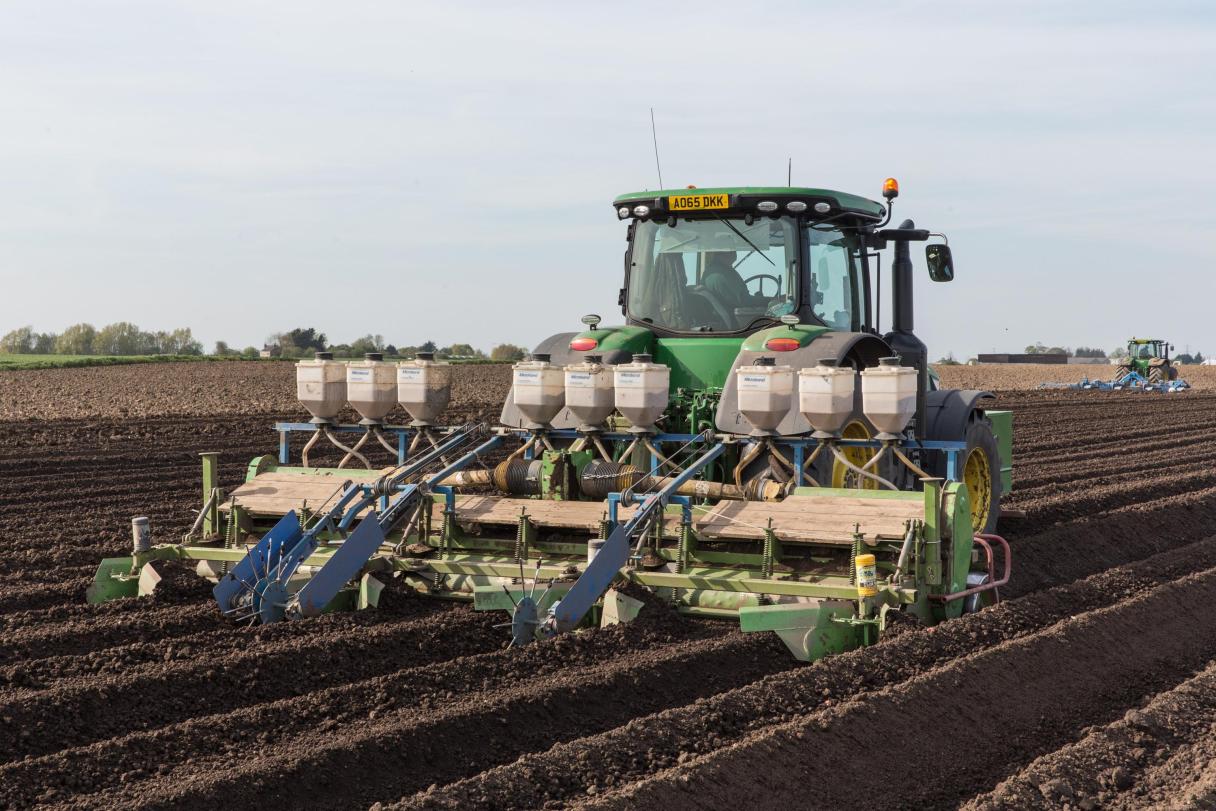
Granular nematicide stewardship best practice set by the NSP follows a series of steps to assure accurate application and incorporation:

1. Qualify
PA4G or PA4 certificate, NIAB e-learning certificate and NRoSo membership.
2. Calibrate
Machinery must be professionally calibrated every two years.
3. Single pass
Apply and fully incorporate nematicides within a single pass.
4. Shut off
Applicators must have the facility to shut off granule flow before the end row.
5. Spillages
Bury small spillages immediately.
6. Check
Check treated fields 12-24 hours after application for adverse effects to wildlife.
Why it matters
You can protect your crops effectively while maintaining industry standards through safe and responsible product use, ensuring the future availability of these crucial tools.

Efficacy
The effectiveness of NEMATHORIN® can be affected by:
Minimising environmental risk
NEMATHORIN® is dangerous to livestock and wildlife. Livestock must be kept away from treated areas for 13 weeks, and all products must be incorporated into the soil immediately after broadcast to protect birds and mammals.
Monitoring of fields, especially row ends, must continue for 24 hours and any incidents of adverse effects reported.
Following the guidance set out by the NSP will ensure effective stewardship, and therefore the continued ability for you to use NEMATHORIN® for years to come.
Product slider
Nematicide
NEMATHORIN 10G
GR (Granule)
- 10% w/w fosthiazate
NEMATHORIN® has a half-life of 35 days, so after this time, 50% of the product is still present. This degradation is needed to prevent residues in final crops, but it also means that a second hatching of PCN later in the season will be subject to a lesser degree of control.