

28th to 30th June 2026
Applications Now Open!
Jealott's Hill International Research Centre, Bracknell, UK
The 2026 Syngenta Postgraduate Scholarship Scheme provides a select group of postgraduate organic chemists with the opportunity to experience the work of a research chemist within our weed control chemistry team through a series of individual and team challenges.
- Work as a team to develop the design and synthesis of a novel herbicide, taking it from lead generation to production, and present this to a panel of Syngenta experts.
- Showcase your research and understanding of organic chemistry to Syngenta scientists and other participants in a flash presentation and in one-to-one sessions.
- Network with Syngenta scientists from across multiple disciplines and hear about the careers available within the department.
Travel, accommodation and meal expenses are covered for all participants.
Application Information
Eligibility requirements: Open to all final and penultimate year PhD students based in the UK and Ireland with organic chemistry as a core element of their research. Your application will need to include:
- A CV detailing your experience to date (2 page limit).
- A research summary describing a key highlight of your PhD to date (1 page limit), and your input towards this. This does not have to include a comprehensive explanation of your full research career, but as this will be read by chemists who are not necessarily experts in your field, you should provide relevant context where necessary. We encourage the use of schemes and pictures to illustrate key reactions or concepts.
- A personal statement (500 words max). The information you provide here will help us understand a little more about you, as well as your motivation for applying for this scholarship scheme. We suggest you use this to consider some of the following topics:
- How will attending this scheme benefit your future professional development?
- What motivates your pursuit of a career in organic chemistry?
- Which of our five Chemistry Values (see below) do you most identify with and why?
Any other relevant information about you and your application can also be included.
Apply now for the 2026 scheme using the button below. Applications close on 13 April 2026.
To see how Syngenta handles and stores your data, click here.
About Syngenta
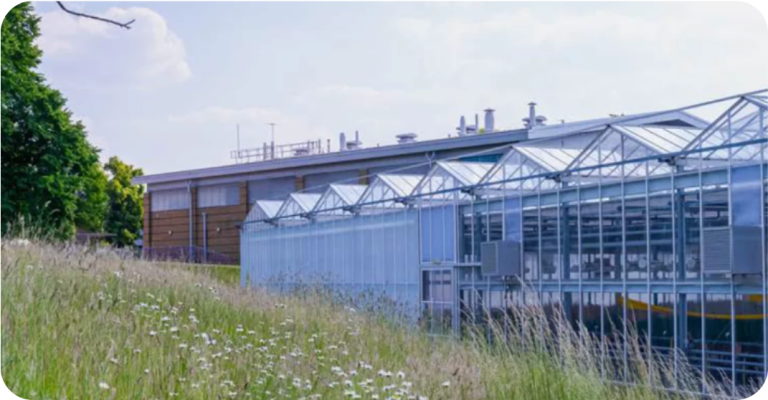
Syngenta Crop Protection is part of Syngenta Group, one of the world’s leading agriculture companies. Our ambition is to help safely feed the world while taking care of the planet. We aim to improve the sustainability, quality and safety of agriculture with world class science and innovative crop solutions. The Syngenta Postgraduate Scholarship Scheme takes place at Jealott's Hill International Research Centre in Berkshire, UK. This site is home to unique levels of expertise within the Syngenta Crop Protection R&D network – a network that comprises 119 sites around the world. Established in 1927, Jealott’s Hill is a key site in Syngenta’s global research and development network, with a long tradition of innovation and employing over 1000 people.
Crop Protection R&D at Jealott's Hill
Jealott’s Hill is our largest R&D site globally and the only site with end-to-end R&D capabilities. As such, Jealott’s Hill collaborates with other Syngenta sites and external research bodies around the world, delivering across all major research areas, from Crop Protection Discovery, Biologicals Research, Weed Control Research, Seeds Research, Bioperformance Enhancement and Product Safety Research.
Its multidisciplinary scientific expertise includes Biological Sciences, Chemistry and Engineering, Data Sciences and Modelling and Human and Environmental Sciences, making it a critical collaboration partner in multiple international R&D projects every year.
Collaboration at its core
All science is collaborative, from evaluating new technologies to conducting fundamental research. In the UK, we have a large number of external collaborations with universities and scientific organisations, and have significantly more R&D collaborations based in the UK than in any other country worldwide. This includes active collaborations with leading UK research universities, such as Cambridge, Warwick, Oxford, Imperial College, Exeter and the John Innes Centre.
“Jealott’s Hill benefits greatly from being based in the UK. With an excellent science base, access to several world leading academic institutes on our doorstep, a strong talent pool and government support for scientific agricultural and food production research, this environment means our scientists can fulfil their global remit and support our global R&D strategy.” Jutta Boehmer, Head of Bioscience, Crop Protection Research.
Jealott's Hill Chemistry Values
Within Crop Protection Research Chemistry at Jealott’s Hill, we focus on the design and synthesis of new crop protection chemicals.
We have developed 5 core values that help to guide our actions and decisions within that focus, aimed at fostering a safe, supportive and energised culture.

Why apply for the 2026 Syngenta Postgraduate Scholarship Scheme?

“The Syngenta Scholarship Scheme provides PhD students with an invaluable insight into the agrochemical industry. I won a scholarship in 2005 and really enjoyed using my knowledge to address the types of synthetic problem that Syngenta engages in” says 2005 Winner John Bower, Professor in Organic Chemistry at the University of Liverpool. “The programme provides a fun and competitive environment where participants can make new contacts and benchmark themselves against their peers. My interactions with Syngenta have continued, and several of my own PhD students have participated in the scheme.”
“Attending the Syngenta Scholarship was a fantastic experience, offering the chance to tackle in teams with other PhD chemists some real life scientific challenges facing the industry and learn a lot from the many different Syngenta scientists involved” says Jon Dallimore, Global CPD Project Management Lead. “Following the Scholarship Scheme I accepted a Team leader role in Herbicide Research with Syngenta where I was responsible for a team of chemists and projects targeting the design of new herbicides. I later moved into a more senior leadership role within Herbicide Research before transitioning to the development organisation at the Syngenta headquarters in Switzerland as a Global Project Leader.”


2016 Winner Rosie Croft, Principal Scientist in Weed Control Chemistry, Syngenta. “Although a daunting prospect, I ended up thoroughly enjoying working with my team to complete the tasks and built a lot of confidence both personally and professionally through the experience.”
Camilla Corsi, Head of Crop Protection Research and Development says “For Syngenta, the scheme allows us to … create long-lasting relationships with some of the best young chemists. Indeed, many participants have subsequently been employed by and continue to work for Syngenta or have maintained contact as they pursue independent academic careers.”